Bon, combien de fois dans une vie nous répète-t-on que le Bien, c’est bien et le Mal, c’est mal. Et, qu’en conséquence, il est nécessaire d’aimer le Bien et de haïr le Mal. Combien de fois dans une vie nous sentons nous secrètement coupables après… une overdose de cookies (le premier, c’était pour remercier le pâtissier, le deuxième ben pour nous faire plaisir et les suivants c’était MAL) ou pire parce que nous avons LOL quand un être humain, appartenant probablement à la catégorie être cher, a raté la chaise en venant s’asseoir à la table du dîner (MAL) et je n’évoque même pas nos petits secrets savamment dissimulés au fond à droite de notre conscience (là, c’est à vous de faire l’inventaire, aïe, je sais, c’est douloureux).
Eh bien, la bonne nouvelle de la rentrée c’est que Mal, c’est bien. Mal, c’est même formidable. Et ce scoop, vous pourrez le partager avec tous les fans de la série House of cards qui débute le jeudi 29 août sur Canal Plus (20h55). Une série brillante qui n’est pas loin de faire l’apologie du Diable. Vous allez probablement adorer vous balader dans Washington aux côtés des plus pourris et cyniques politiciens jamais imaginés. Cela sera grâce au talent de David Fincher (oui, le réalisateur de The Social Network), de Beau Willimon (oui, le coscénariste du film de George Clooney, Les marches du pouvoir) et de leurs acteurs impeccables. Kevin Spacey dans le costume du représentant démocrate Francis Underwood à l’ambition contrariée au lendemain d’une élection présidentielle dévoilera une vision très sombre du pouvoir et de la politique à l’aide d’un humour délicieux. Au terme des treize épisodes, vous pourriez même être tenté de voter pour lui. Ne le faites pas. Cela serait mal.
Potentiel BFFF (Personnage préféré pour toute la vie): total. A regarder: pour réfléchir, pour trembler, pour sourire.
La semaine prochaine dans ILTVSW… Oups, pas encore tranché, désolée.
Titre/title: House of cards (Depuis/Since 2013) Créateur/Creator: Beau Willimon Cast: Kevin Spacey (Francis « Franck » Underwood), Robin Wright (Claire Underwood), Kate Mara (Zoe Barnes), Corey Stoll (Peter Russo) Maths: 1 saison/season 13 épisodes Chaîne/Network: Netflix (VOD) Canal Plus
How many times in a lifetime have we been told that it is the right thing to do to like Right and to hate Wrong. How many times have we felt secretly guilty because we … did OD on cookies (the first one to thank the baker, the second to please ourselves and all the other ones WRONG) or did we LOL because someone, most probably a loved one, like missed the chair at the dinner table (WRONG) and not to mention all our deeply buried secrets (your turn, clear your conscience, ouch I know it hurts)
Good news people starting this week Wrong is good. Wrong is awesome. And you will share the intel with all the fans of House of cards starting Thursday august 29 on Canal Plus (20h55). A TV show that brilliantly celebrates the Evil. And you are going to love to hang out in Washington with rotten and cynical politicians thanks to David Fincher (yes, The Social Network director), Beau Willimon (yes the guy who co-wrote George Clooney’s movie The Ides of March) and a wonderful cast. Kevin Spacey as congressman Francis Underwood is going to walk you through a very dark vision of power and politics with a delicious sense of humor in the aftermath of a presidential election. Thirteen episodes later, you might even consider voting for him. Do not. WRONG.
BFFF (Best fiction friend forever) potential: total. To watch: to think, to freak out, to smile.
Next week in ILTVSW… Oops, not decided yet, sorry.
Merci Arte. Qui aurait dit que la chaîne européenne allait finir par devenir l’antenne la plus pop du paysage audiovisuel français? Grâce à une sélection de séries de plus en plus pointue, elle s’est imposée comme the chaîne to watch pour les séries addicts. Dernière pépite diffusée par Arte: Hatufim ou Prisonniers de guerre en VF qui débute jeudi à 20h50. Une série audacieuse, âpre et complexe qui aborde un sujet méconnu: le retour à la vie et à la vie civile de soldats israéliens otages libérés. Créée par Gideon Raff, elle a inspiré la série américaine Homeland, dont le scénariste est également co-auteur. Mais quand l’Américaine carburait à la paranoïa post-11 septembre, l’Israélienne pose subtilement la question de la possibilité du retour parmi les leurs de soldats traumatisés par dix-sept ans de captivité. Hatufim, plus intimiste aussi au plus près de Uri, Nimrod, Amiel et de leurs familles.
Série made in Israël. Assez surprenante et perturbante.
Potentiel BFFF (Personnage préféré pour toute la vie): non négligeable. À regarder : pour découvrir, pour trembler, pour réfléchir.
La semaine semaine prochaine dans ILTVSW… Oups, pas encore tranché, désolée.
Well, thank you Arte. Who would have thought that the European cultural broadcaster would become the most trendy place on French TV? Its subtle selection of foreign TV shows allows Arte to claim the title of the place to be for any respectable TV Shows addict. If you still hardly believe it, please watch Hatufim starting this thursday at 8.50 pm. A daring, tough and complex show telling the story of Israeli soldiers coming home after seventeen years of captivity. A highly sensitive subject… Created by Gideon Raff, Hatufim inspired the American TV show Homeland thatRaff also coproduces. Unlike Homeland, a thriller focused on the aftermath of 9/11, Hatufim raises the issue of coming back in the Israeli society after such a trauma. It centers around Uri, Nimrod, Amiel and their families, around every day life struggle for survival of kidnapped soldiers.
Made in Israël TV show. Surprising and perturbing.
BFFF (Best fiction friend forever) potential : real. To watch to discover, to freak out, to think.
Next week in ILTVSW… Oops, not decided yet, sorry.
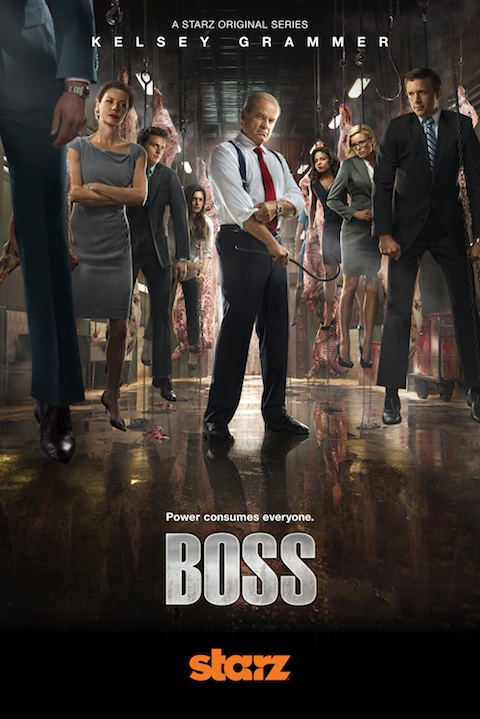
Farhad Safinia était à Paris la semaine dernière à l’occasion du Festival Séries Mania saison 4. Le créateur de Boss – une série qui suit Tom Kane, un maire de Chicago condamné par une maladie neurodégénérative qui tente de conserver le pouvoir sur son royaume corrompu à tout prix – a donné une formidable masterclass.
Il est l’un des auteurs les plus talenteux de la télévision américaine et ILTVSW a eu la chance de pouvoir l’interviewer longuement.
ILTVSW: Certains observateurs disent que la série The West Wing montre le monde comme il devrait être alors que Boss dépeint le monde comme il est. Qu’en pensez-vous?
Farhad Safinia: The West Wing était une série très inspirante, pleine d’espoir qui se déroulait dans un monde comme nous aimerions qu’il existe. Mais je ne crois pas qu’en conséquence Boss soit plus réelle. Dans la série, certaines libertés avec la réalité sont aussi aussi importantes et peut-être même plus importantes que dans The West Wing. Il ne s’agit simplement pas des mêmes libertés avec la réalité. La tonalité des deux séries est tellement différente qu’il est impossible de les comparer sauf à constater qu’elles traitent toutes les deux de politique. La chose la plus importante à signaler à propos de Boss, c’est que la série trouve beaucoup de sources d’inspiration dans le monde réel. C’est aussi une histoire universelle et c’est la raison pour laquelle elle donne cette impression de réalité. Elle puise aussi dans le monde de la fiction comme dans Le roi Lear par exemple. Boss est très lyrique. Lorsque l’on se rend à l’opéra, on voit des gens se faire empoisonner, se faire poignarder, c’est très mélodramatique. Mais on rentre chez soit avec quelques vérités qui concernent notre propre vie. J’espère que la série permet cela également.
ILTVSW: Peut-être cette réflexion est-elle née du fait que la réalité est bien plus noire que celle de The West Wing…
F.S. C’est un argument intéressant. Nous avons cette conversation ici en France et il y a une différence considérable entre les attentes en matière culturelle des Européens et celles des Américains dont j’ai pris conscience grâce à Boss. Dans l’industrie du divertissement aux États-Unis, il y a un énorme désir pour les choses positives et qui donnent de l’espoir. L’une des choses que demandent toujours les gens qui regardent la télévision est: dans qui puis-je me reconnaître? Qui est mon ami? Quel personnage j’aime? Je ne pense pas que l’on se pose ce genre de questions en France, en Angleterre, aux Pays-Bas ou en Allemagne. Dans les séries très noires et intéressantes qui viennent de ces pays, il ne faut pas rendre un personnage aimable à tout prix parce que ce n’est pas ce que recherchent les téléspectateurs. Le désir d’être diverti n’est pas obligatoirement associé à quelque chose de léger. Bon, j’ai conscience que je généralise un peu grossièrement. En France comme aux États-Unis, il y a sûrement un public pour les deux types d’approche. Mais cette différence se manifeste de manière très frappante dans le sport. J’ai grandi en France et en Angleterre, quand nous avons déménagé aux États-Unis, j’ai été frappé par le fait que la gratification immédiate est le ressort des sports américains. Au basketball, on peut marquer cent points dans une partie. Au football américain vous pouvez obtenir trente, quarante, cinquante points alors que le football européen est un sport de frustration. Cela se traduit également en matière culturelle et politique. Quand vous regardez Boss et The West Wing, cette approche différente se manifeste.
ILTVSW: Le travail de David Simon dans les séries The Wire et Treme serait donc un contre-exemple?
F.S. Je n’ai jamais rencontré David Simon mais je pense que The Wire est une série européenne. Son rythme, son niveau de langage, en font une série européenne. Comme Deadwood de David Milch, d’ailleurs. Il faut dire qu’Aaron Sorkin aime les mots aussi. Tout est dans le désir de ne pas forcément aborder les choses d’un point de vue optimiste. Même si finalement même dans Boss il y a quelque chose d’optimiste. Je ne pense pas qu’il soit possible d’être si sombre sans, d’une manière ou d’une autre, laisser potentiellement une porte de sortie. Ce n’est pas quelque chose que je souligne particulièrement mais si vous prenez la saison 1 de Boss, l’un des personnages les plus cyniques, durs et irrécupérables fait quelque chose de complètement naïf et optimiste à la fin même si c’est quelque chose d’horrible mais il essaye quand même d’agir dans le sens du bien.
ILTVSW: Quelle pourrait donc être la porte de sortie?
F.S. Je pense que la porte de sortie, on la trouve en soi. Je ne pense pas que l’on puisse changer énormément les choses de l’extérieur. C’est le contraire de ce que de nombreuses personnes pensent. Elles pensent que si l’on encourage les gens à descendre dans la rue et à hurler, il est possible de faire évoluer les choses. À de nombreuses reprises, nous avons vu ce pouvoir des gens se dissoudre et ne conduire à rien. Comme avec les mouvements Occupy Wall Street ou le Tea Party. Boss n’est pas une série à idéologie, on ne peut pas la situer politiquement. Je n’y exprime pas mes opinions politiques. Mais elle montre que le désir des gens de changer le cours des choses se dissout dans le système politique. Il s’évapore. C’est presque comme si le système avait été construit pour ne pas lui apporter de réponse. C’est quelque chose qui m’a toujours frustré et je pense que c’est frustrant quelque soit le courant politique dans lequel on se reconnaît. Une série comme Boss montre pour quelles raisons les choses se passent ainsi. Nous parlons de personnes qui au nom de leurs droits acquis ne veulent pas le changement, des personnes qui bénéficient du status quo, qui servent leurs intérêts grâce au système. Elles ne veulent surtout rien changer et c’est vraiment le sujet de Boss.
ILTVSW: Pourquoi la série ne pouvait-elle se dérouler qu’à Chicago?
F.S. J’ai d’abord choisi l’histoire que je voulais raconter, les personnages et puis nous avons choisi la ville. Quand on envisage la problématique de cette manière, il était impossible de ne pas choisir Chicago. Quel est le sujet de la série? C’est une série qui traite de la corruption au plus haut niveau, d’un système politique cassé et c’est aussi l’histoire d’un roi à la tête d’un royaume puissant sans rivaux sauf s’il montre la moindre faiblesse. C’est une histoire universelle. Elle remonte à Shakespeare, à la littérature française et italienne, à l’époque de la reine Elizabeth. Le gars en question n’a pas hérité de son trône, il a gravi les marches du pouvoir tout seul ce qui est très américain. Vous prenez ces deux dimensions et vous vous demandez: où l’histoire peut-elle se dérouler? Chicago est l’endroit parfait. C’est comme un royaume au milieu du pays que ses maires ont géré comme de puissants monarques. Les paysages sont parfaits. Chicago ressemble à une scène d’opéra. À chaque fois que vous ne savez pas très bien quoi faire avec la caméra ou comment terminer une scène, vous montrez simplement les gens ou l’architecture de cette belle ville et ces élements racontent bien plus que n’importe quelle scène que vous auriez pu écrire. Nous avons vraiment eu de la chance de pouvoir tourner là-bas.
ILTVSW: Qu’y a-t-il de si plaisant dans toute cette noirceur pour les téléspectateurs? Les temps sont durs, ils pourraient avoir plutôt envie de s’échapper…
F.S. Je ne pense pas que cela soit le cas. Même si, c’est vrai, certains en expriment le désir. Je vivais aux États-Unis après le 11 septembre et le film numéro un au Box office était En territoire ennemi un film avec Owen Wilson et Gene Hackman. Il racontait l’histoire d’un soldat américain largué derrière la ligne de front en Serbie qui se battait seul contre tous pour rentrer au pays ou quelque chose comme cela. Ça c’était vraiment un film correspondant à se désir de s’échapper. Cela a été un grand succès. Mais je ne crois pas que le succès aurait été le même si la population américaine n’avait pas connu un traumatisme aussi important. C’était un bon film. Un film d’action. Mais je pense qu’il existe une autre partie de la population qui désire être transportée dans des mondes qu’elle ne connaît pas. C’est très puissant comme expérience. Cela n’a pas grand chose à voir avec un point de vue optimiste ou pessimiste. C’est simplement très enrichissant. Quand on me transporte comme cela, l’adrénaline monte, j’adore ce genre d’histoires.
Copyright ILTVSW 2013
La semaine prochaine dans ILTVSW… Oups, pas encore tranché, désolée.
Farhad Safinia was in Paris last week to attend Séries Mania Festival season 4, an event dedicated to TV shows from all around the world. The creator of Boss – a show that follows Tom Kane a fictional mayor of Chicago dying from a neurological disease and trying to keep his powerful position by any means – gave a great masterclass.
Interview of one of the most talented author on American TV. ILTVSW was lucky enough to seat with him for half an hour.
ILTVSW: Some people say The West Wing shows the world as it should be and Boss shows the world as it is. What do you think of this assumption?
Farhad Safinia: The West Wing was a very inspirational story, a hopeful story in a world you wish it existed. But I don’t necessary think than as a result Boss is more real. There are certain departures from reality in Boss that are as extreme if not more so than whatever departures from reality were in The West Wing. They are just very different kinds of departures. The tone of Boss is so completely different from The West Wing that it is very hard to draw any kind of comparison between the two apart from the fact that they are both about politics. What I would say about Boss is it’s a world that should be recognizable but only because of the exaggeration that we make. In terms of the texture of the world, the characters and the plot line. The most important thing to say is that there are many sources of inspiration for Boss that are from the real world. It is a universal story that’s why it feels kind of real to people. But there are fictional inspirations too. I said that King Lear was one of them. Boss is very operatic. When you go to see an opera, people are getting poisoned, they are stabbing themselves, it’s very melodramatic but you walk away with a certain element of truth about your own life and I hope the show does that as well.
ILTVSW: Maybe they thought so because reality is way darker than in The West Wing?
F.S. This is an interesting point because we are talking here and we are in France and there is a big difference between the anticipation and expectations of European cultures about their entertainment versus American culture which I become very aware of as a result particularly of this show. There is a big desire in American entertainment to be very positive and very hopeful about what it is that you are seeing. One of the things that people always say on American television is: who can I relate to? Who is my friend? Which character in the story do I like? There is no such question in French entertainment, English entertainment, Deutsch or Danish entertainment. You watch the very dark and interesting shows that come out of these European cultures where there is no need to make any character likable necessarily because people aren’t looking for that. There is a degree of an appreciation of being diverted in your mind and entertained that it doesn’t necessarily have to come about the result of something light and hopeful. It can be extraordinary dark and dissembling. It is a kind of gross generalization in both country there are people who like both kind of thing. But it manifests itself more than anything in sports. I grew up in England and in France, when I moved to the United States I noticed American sports were so much more about instant gratification. In basketball you get a hundred points in one game, in American football you get thirty, forty, fifty points and you compare to football, soccer where it is a game of frustration. That is so manifest in the American culture as well and in the american politics. Those are some of the differences between the two. When you look at shows like Boss and The West Wing you notice some of those cultural differences.
ILTVSW: David Simon’s work in The Wire or Treme would be a counter-example?
F.S. I have never met him, but David Simon in The Wire made an European show. The pace of it. The degree of language. David Milch as well with Deadwood. Sorkin loves language too. But the thing is the desire not to necessarily come to an optimistic point of view. About Boss, I think there is a voice of optimism in it. I think you can’t be that pessimistic or dark about anything without somehow showing a way out potentially which I don’t put a big spotlight on but certainly if you watch like the first season of Boss, one of the most cynical hard edge most irredeemable characters in the show does something entirely naive, optimistic and hopeful at the end which is a horrible thing but still is for something better.
ILTVSW: What could be the way out?
F.S. In my opinion, though, I actually think the way out comes from inside. I don’t think we can affect an enormous amount of change from the outside. Which is contrary to what a lot of people say. They say that if we pour into the streets, we really shout, we can make stuff happen but too many times you have seen that power of people dissipates and not get anywhere. Whether you look at the Occupy Wall Street movement in America, the Tea party… Boss is not a show about ideology, it does not place itself on a political spectrum. It’s not about my own personal politics. The galvanization of popular desire to affect some kind of change dissipates within the political system. It sort of evaporates. It is almost as though the system is designed not really to respond. That’s something I have been frustrated with and I think that’s something that applies no matter what your political ideology is. We talk about vested interest who don’t want change, who are benefiting from the status quo, who are providing for themselves by the system that is in place, they don’t want to make any change and that’s the key point of what the show talks about.
ILTVSW: Why was Chicago the perfect town for Boss?
F.S. It worked out this way, I first new the story I wanted to tell, the characters and then we chose the location. When you look to it that way it is almost impossible not to pick Chicago. What’s the story about? It is a story about high power corruption, brokenness of the political system also about a king ruling a powerful kingdom where he is unchallenged by his rivals around him but at the same time if he shows any kind of weakness they are going to jump at him. Which is a very universal story, it goes back to anything you have read from Shakespeare, French, Italian literature, Elizabethan times, all those kinds of things. That’s who he is. And the guy himself is not a king who inherited his throne, he climbed up through ambition which is a very American story. You take those two things and you say where am I going to place that story? Chicago is the perfect place. It is like a kingdom in the center of the country which the mayors have ruled very much like powerful monarchs. And the setting is so perfect. It feels like an opera stage. Anytime you don’t know what to do with a camera, anytime you don’t know how to end a scene just show some people, some architecture of this beautiful city, it just tells you so much more symbolically that you could ever do in writing. So we were very lucky to be able to go there.
ILTVSW: What is so likable in this for the audience? Times are tough, you could think people would want escapism…
F.S. I think that’s actually not the case. I mean some people want that. I remember I was living in the United States after 9/11 happened. And the number one movie at the Box office was this Owen Wilson/Gene Hackman film Behind the enemy lines about an American soldier who gets drop behind the lines in Serbia and fights is own way back or something like that. It was pure escapism. But it was a huge hit and I think it wouldn’t have been unless these people had had this trauma happen to them to that degree. It was a good film. An action film. That’s the thing people want a get away. I should think there is another segment of the population that basically just likes to be taken inside worlds they don’t get to experience. That is very powerful and it does not necessarily has to dot with an optimistic point of view or a pessimistic one. This is incredibly compelling. I myself whenever I am taken in a journey like that, my adrenaline is rushing, I just love that kind of story telling. That’s the key behind it.
Hans est attiré par Mimi. Mais, Mimi aime Leo. C’est un énorme problème mais ce n’est pas son plus gros problème. Non, Arte, la chaîne de la culture, n’a pas choisi de se réinventer en diffusant des séries sentimentales aussi complexes qu’une équation à une inconnue. Car le gros problème de Mimi est qu’elle est un « hubot » « hu » pour humain, « bot » pour robot. Et que, comme ses nombreux amis, elle étouffe dans sa peau en plastique d’humanoïde et rêve d’avoir une vie, une vraie. Comme celle de la famille Engman, les êtres humains qui l’ont achetée pour se débarrasser de leurs tâches domestiques.
Quand Mimi et ses amis s’énervent, c’est forcément désagréable pour nous les humains… Même lorsqu’ils ne s’énervent pas d’ailleurs car ces hubots nous renvoient à nos faiblesses, nos lâchetés et nos renoncements. Et, c’est assez terrifiant. Série venue de Suède. Perturbante et intéressante.
Potentiel BFFF (Personnage préféré pour toute la vie): réel. Regarder : pour trembler, pour réfléchir, pour sourire.
La semaine prochaine dans ILTVSW… Oups, pas encore tranché, désolée.
Titre/Title: Real Humans (depuis/since 2011)
Créateur/Creator: Lars Lundström
Maths: 1 saison/season 10 épisodes
Chaîne/Network: STV1
En France: à partir du jeudi 4 avril à 20h50 sur Arte
Hans has a crush on Mimi. But Mimi loves Leo. That’s a big problem but not her biggest concern. No, « Arte », the french german cultural television network, did not change its editorial policy and suddenly decided to forget opera and broadcast soap opera. Because the only big problem Mimi has to face is her « hubot » status. « Hu » for human, « bot » for robot. Like lots of her friends, she cannot stand anymore her plastic skin and dreams of a real life. A life like the one of the Engman family, the real humans who bought her to do their housekeeping.
When Mimi and her friends get mad, it is not good for us, the real people. Even when they do not, though. Because these hubots remind us of our weaknesses, cowardices and self-denials. And this is quite terrifying. Made in Sweden TV show. Interesting and perturbing.
BFFF (Best fiction friend forever) potential: real. Watch to freak out, to think, to smile.
Next week in ILTVSW… Oops, not decided yet, sorry.




 I love TV so what?